Werte > Pflege von Flächen > Ecosystems
(This is the website of the German-speaking Forum for Pastoral Economy and Biodiversity, this page is the only one translated into English [German original]; the information is mainly based on the Palaearctic Realm. We have also got dictionaries from English into other languages and vice versa.)
Anyone who has ever taken a look at ecology, knows that especially extensive pastoral economy with its ecosystems rich in species contributes considerably to biodiversity. Rangelands are biodiversity hotspots. That’s why every person interested in biodiversity supports pasture grazing, for instance by buying its products.
Scientifically it is wellknown. Still it is important also to spread the information among non-scientists. They need to understand the worth and they need to be called to action as consumers. Pastoralism is the future.
Grasslands have more earthworms, springtails and eelworms than crop fields, with regard to both the number of species and the number of individuals.
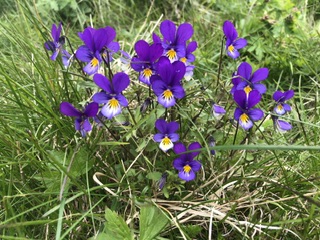
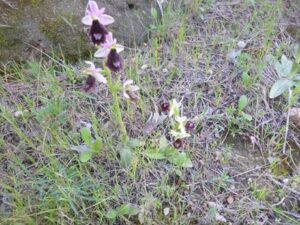
While in nutrient-rich places few competitive plant species tend to dominate, rough (oligotrophic) pastures are welcome refuges for less competitive plants.
The most important family on meadows and pastures is the one with a 30 million year coevolution with the ruminants: the grasses (Poaceae). Some grass species belong to the plants with the highest forrage value. The matgrass (Nardus stricta), however, is only pulled out by cattle without being eaten.
When comparing meadows and pastures floristically, similarities are more prominent than differences. However, on meadows many plants cannot flower, depending on the times of mowing. Thus insects that visit flowers, like butterflies, moths and wild bees but also honey-bees (Apis mellifera), find more offerings of nectar and pollen on pastures, wild bees with the exception of bumblebees usually being specialized on few plant species.
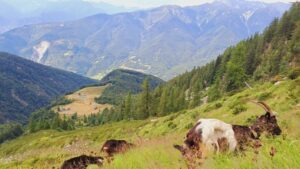
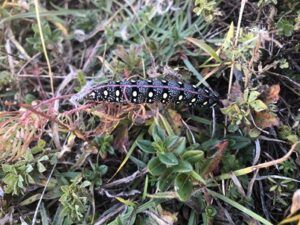
Also food plants for caterpillars can be found on grasslands. Moreover there are butterflies that as caterpillars live on shrubs and therefore take advantage of a mosaic of hedges and pastures.
Among the birds especially those that breed on the ground find places on pastures during the time without grazers. Birds of prey look for food on pastures, buzzards for mice, eagles for marmots.
Wild herbivores like roe-deer, red deer and chamois find grazing grounds on pastures. In the Alps marmots take great advantage of pastures. Among the carnivores, foxes like to look for mice on pastures. Of course also Homo sapiens belongs to the animals that find a living space thanks to pasture grazing, the pastoralists as their working place, the tourists as a recreational area.
Apart from plants and animals there are also some fungi found on pastures, a widespread species is the parasol mushroom (Macrolepiota procera). Bacteria and archaea can only be found with a microscope. Both are present in the rumens of ruminants and make the digestion of cellulose possible.

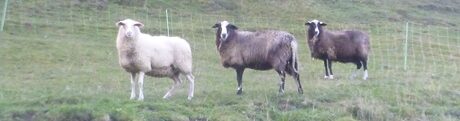
And, of course, agrobiodiversity including the diversity of livestock breeds forms a part of biodiversity too. The genetical potential of extensive breeds is mainly conserved by extensive pasture grazing. It is a wellknown fact among breeders that in order to conserve a breed, it is necessary to eat it.
External Links:
- Pastoralism Can Mitigate Biodiversity Loss on Global Rangelands
- Cuando i pastori se ne vanno: il silenzioso ritorno del bosco (in Italian)
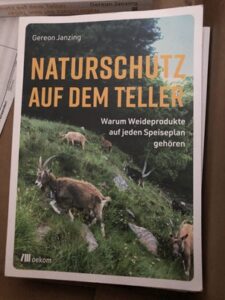
- Book „Naturschutz auf dem Teller“ (in German)
- Article „Ökosystem Alp“ (in German, p. 50f)
- Milchtrinken ist Naturschutz (in German)