
Tiere > Tierarten > Goats and Camels, Masters of Survival
Masters of Survival: The Adaptation of Goats and Camels to Harsh Drylands and Their Vital Role in Pastoralist Livelihoods
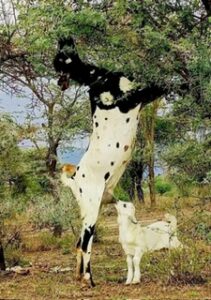
A goat browsing on an acacia tree
Goat browsing on an acacia tree in the drylands of northern Kenya. Standing upright on its hind legs, the goat reaches leaves and young shoots that are inaccessible to many grazing animals. This browsing behaviour is a key adaptation to arid and semi-arid environments, where grass is often scarce during prolonged dry periods. By utilizing shrubs and trees as forage resources, goats can survive under conditions that would challenge less adaptable livestock species.
The suckling kid highlights the importance of goats for pastoral livelihoods. Even in harsh environments, goats provide milk, meat, income, and herd regeneration. Their ability to convert sparse woody vegetation into valuable food products makes them one of the most resilient livestock species in dryland ecosystems and an essential component of pastoral production systems. The image illustrates the close relationship between livestock adaptation, pastoralist livelihoods, and the sustainable use of rangeland resources.
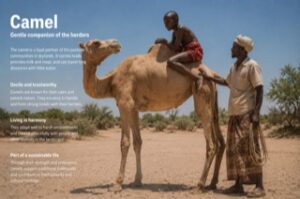
Camel – Gentle companion of the herders
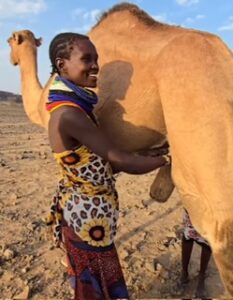
The camel is a loyal companion of pastoral communities living in arid and semi-arid lands. It provides milk, meat, transport, and livelihood support, making it one of the most valuable animals in dryland ecosystems. Its ability to travel long distances with little water makes it indispensable to herders.
Docile and Trustworthy
Camels are known for their calm, patient, and friendly nature. They develop strong bonds with their herders and are often trusted to carry people and goods across vast landscapes. Their gentle temperament allows even children to interact with them comfortably, as seen in the close relationship between the camel and the young herder in the picture.
Living in Harmony
The camel coexists peacefully with pastoral communities and adapts well to harsh environmental conditions. It thrives where other livestock may struggle, feeding on sparse vegetation and enduring extreme temperatures while remaining a dependable partner to its owners.
Part of a Sustainable Life
Through their strength, endurance, and resilience, camels support traditional pastoral livelihoods and food security. They contribute to the cultural heritage of dryland communities and symbolize the deep connection between herders and their environment, helping families sustain their way of life across generations.
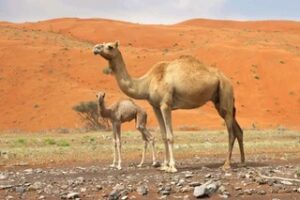
Camel – The ship of the desert
The camel is one of the most remarkable animals of the world’s drylands, perfectly adapted to survive in some of the harshest environments on Earth. In this photograph, a mother camel stands protectively beside her calf in a vast desert landscape, demonstrating the resilience and adaptability that have made camels indispensable to pastoral communities for centuries.
The camel’s most distinctive feature is its hump, which stores fat that can be converted into energy when food and water are scarce. This adaptation enables camels to travel long distances across arid regions and survive for extended periods without drinking. Their ability to conserve water, tolerate high body temperatures, and withstand extreme heat makes them exceptionally suited to desert ecosystems.
Camels are equipped with long legs that elevate their bodies above the hot desert ground, reducing heat absorption. Their broad, padded feet prevent them from sinking into loose sand, allowing them to move efficiently across dunes and rocky terrain. Thick eyelashes and closable nostrils protect them from blowing sand and dust during desert storms.
As highly adaptable browsers, camels feed on a wide variety of vegetation, including thorny shrubs and dry plants that many other livestock species cannot utilize. This feeding behavior enables them to thrive in areas where forage resources are limited and unpredictable.
For pastoralists, camels are invaluable livestock because they continue to provide milk, transport, and livelihood opportunities even during prolonged droughts when other animals may struggle to survive. Their hardiness, mobility, and efficient use of scarce resources make them a cornerstone of pastoral production systems in arid and semi-arid lands.
The presence of the calf beside its mother highlights the camel’s role in sustaining pastoral livelihoods across generations. Through their extraordinary adaptations and resilience, camels remain symbols of survival, endurance, and life in the desert.